
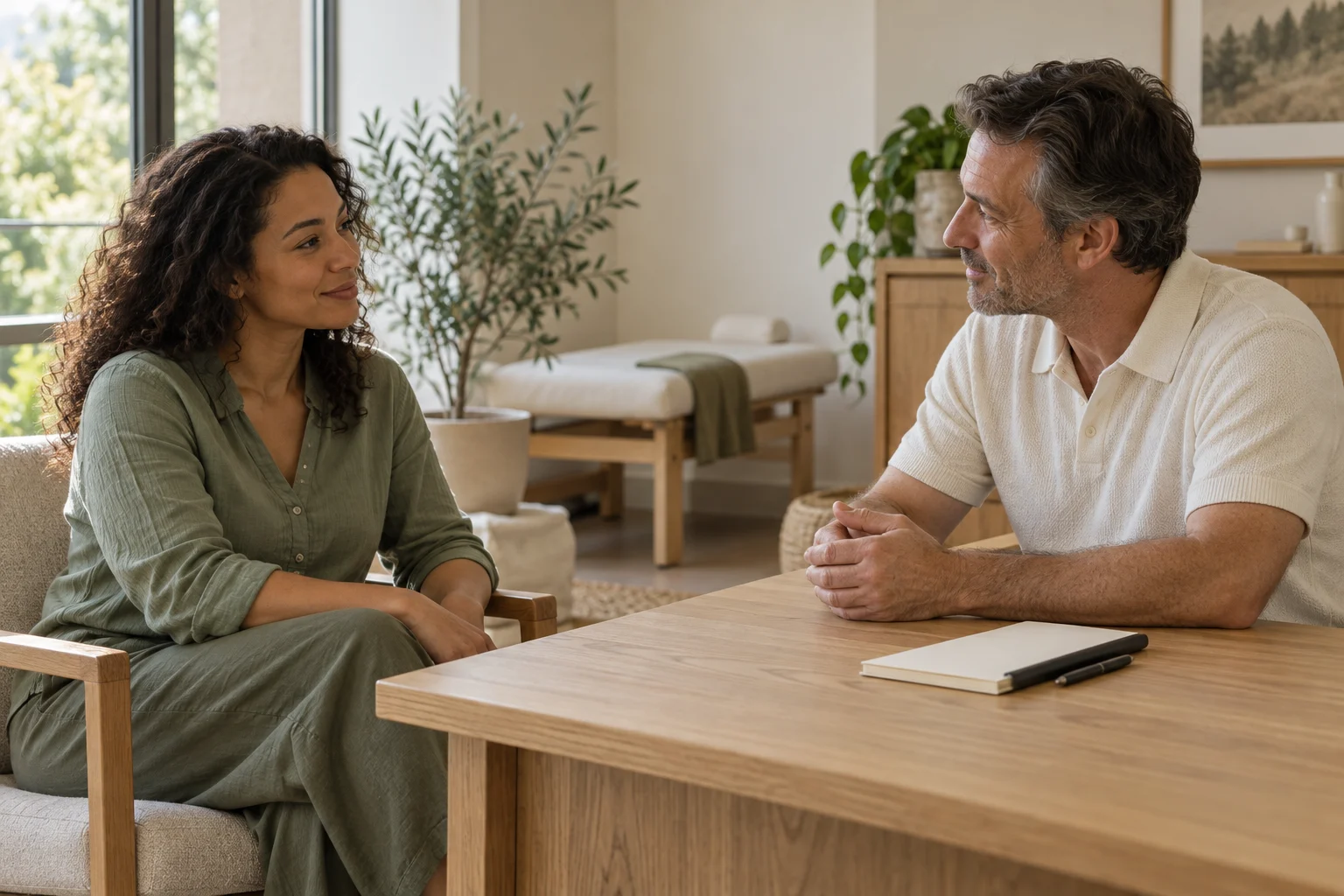
Understanding manual practice.
Osteopathic manual practice uses hands-on assessment and techniques, with attention to movement, tissues, and the person’s overall health history. The association describes a whole-person approach tailored to individual needs.
Your first appointment
A conversation
Discuss your main concern, medical history, medicines, and previous care.
An assessment
Your practitioner assesses your needs. Loose, comfortable clothing can help with movement assessment.
A shared plan
Discuss findings, proposed treatment, risks, alternatives, and consent before proceeding.
Techniques described by the association
Osteoarticular techniques, visceral mobilization, cranial approaches, myofascial work, muscle energy, and strain-counterstrain appear in the original overview. Ask your practitioner which approach is appropriate and why.
A few helpful answers.
How do I confirm a member’s status?
Find the practitioner in the directory, then ask OOAMA to confirm current membership. Directory details can be updated by the association.
How do I book an appointment?
Contact your chosen practitioner or clinic directly. If contact details are missing, ask OOAMA for help finding the right contact.
What should I bring?
Bring your health history, a list of medicines, and any questions. Wear comfortable clothing that allows movement.
Will my benefits cover the visit?
Before booking, ask your insurer whether your plan accepts the named practitioner and OOAMA membership, and whether referrals or limits apply. Ask the clinic about receipts and direct billing.
Questions about your care?
Ask your practitioner about the proposed approach, expected benefits, risks, and alternatives.